Contact Info
- Salt Lake City, UT 84117
Introspective science fiction books do more than imagine the future. They ask difficult questions about who we are, what we remember, how technology changes us, and how much control we really have over our lives. I write science fiction that combines mystery and suspense with these deeper questions, giving readers stories that are exciting on the surface but stay in the mind long after the final page.
I believe the best science fiction does not simply ask, “What could happen?” It also asks, “What would it mean for us if it did?” That question shapes much of my work. My stories explore technology, memory, identity, power, politics, human behavior, and the unknown.
Introspective science fiction looks inward as much as it looks forward. It uses futuristic ideas, strange events, or imagined technologies to explore human thoughts, emotions, fears, and choices.
A story can involve an unexplained signal or an advanced technology, but the real question may be much more personal. What happens when you cannot trust your own memory? What happens when technology begins to change your identity? What would you do if a system you trusted suddenly turned against you? These are the kinds of questions I like to explore through fiction.
Introspective sci fi books give readers both a story to follow and ideas to consider. They can offer suspense, mystery, and imaginative worlds while also exploring issues that feel surprisingly close to everyday life. My science fiction often brings together:
Mystery and unanswered questions
Technology and human behavior
Memory and identity
Time and reality
Political and social power
Personal choices and consequences
Fear of the unknown
I want readers to enjoy the story first. Then, perhaps, I want them to pause and think about what the story means.
I use science fiction as a way to examine familiar human problems from an unfamiliar angle. Technology can change how people communicate. A mysterious event can challenge what someone believes about reality. A political system can reveal questions about authority and control.
The futuristic or unusual element gives me a way to look at these subjects differently. That is what makes introspective science fiction so interesting to me. The setting may be unfamiliar, but the emotions are not.
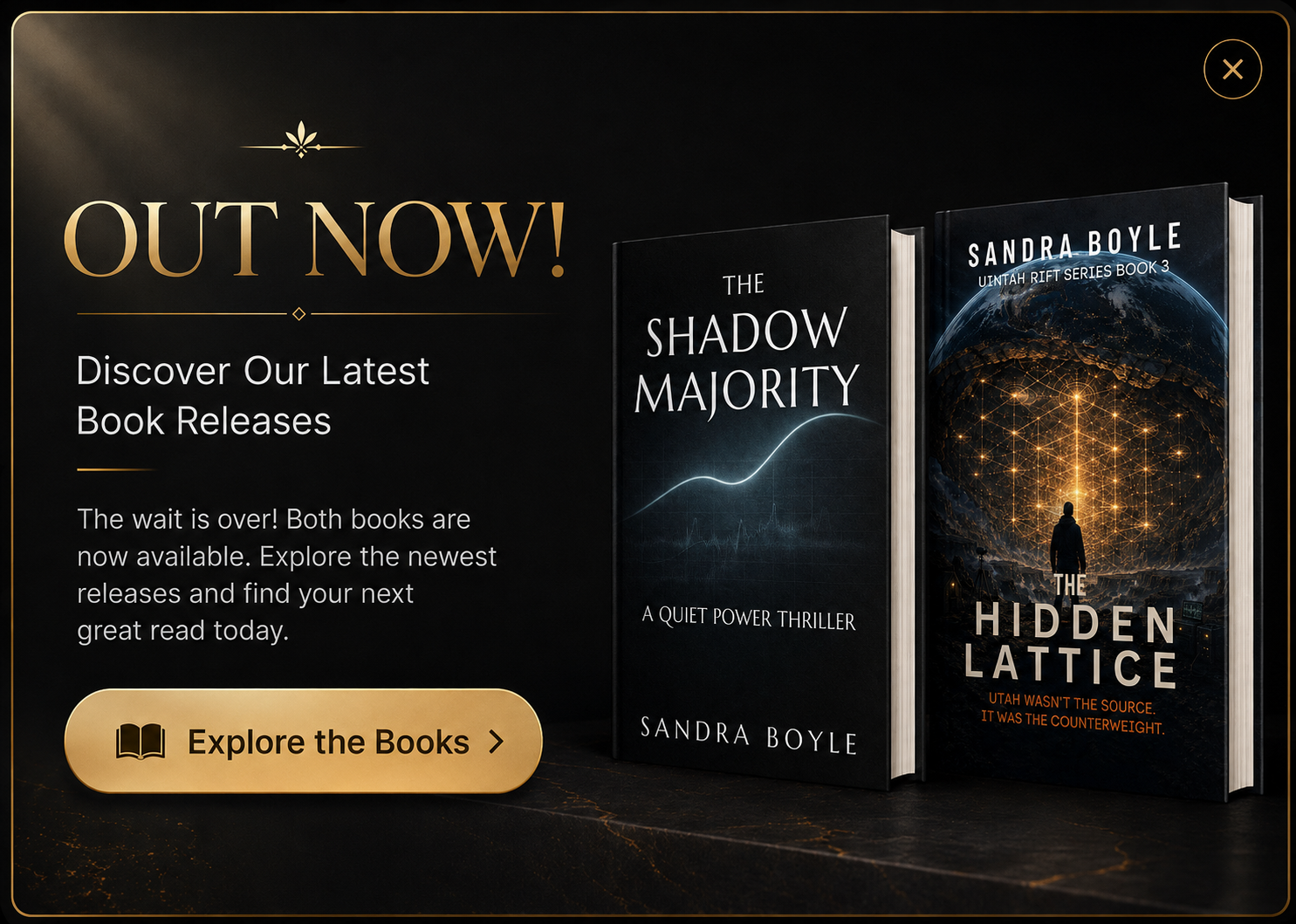
The Unitah Rift Series is a major part of my science fiction work. It begins with a mystery connected to the Uintah Basin and gradually expands into a much larger story involving distortion, signals, technology, networks, time, and consequences that reach beyond one location. The series includes:
The story grows as the mystery develops. Each book adds another layer while raising new questions about what is happening and why.
Absolutely. Thinking deeply does not mean a story has to move slowly. I combine introspective ideas with suspense, uncertainty, and unanswered questions. I want readers to wonder what will happen next while also thinking about why it matters.
A character may be trying to solve a mystery, but that mystery can also force them to question their memories, beliefs, relationships, or understanding of reality. That combination is at the heart of the kind of science fiction I enjoy writing.
Memory and identity are powerful themes because they affect how people understand themselves. If a memory changes, what happens to the person who remembers it? If someone cannot trust what they remember, how can they decide what is real?
These questions are especially important in The Remembering, my psychological thriller. The story explores the unsettling experience of memories appearing without a clear origin.
Although the book sits in the psychological thriller genre, it shares an important quality with my science fiction: it asks readers to question what they think they know.
Yes. Questions about power, authority, democracy, and political systems also appear in my work. My political suspense novels explore situations where individuals and institutions face difficult choices.
The Shadow Majority examines democratic participation. The Third Run explores political and constitutional questions surrounding a president serving beyond two terms. The Quiet Defector follows a journalist who receives a message after a source disappears. These stories approach politics through suspense while also asking broader questions about power and responsibility.
Readers looking for introspective science fictions can expect stories that combine imaginative ideas with human questions. I do not see science fiction as an escape from reality. I see it as another way to examine reality.
Technology, politics, memory, identity, and power are all parts of the world we already live in. Fiction allows those subjects to be pushed into new situations and viewed from a different perspective.
For readers searching for introspective scientific fictions with mystery, suspense, and ideas that invite reflection, my books offer several different paths into that world.
My fiction brings together science fiction, psychological thrillers, and political suspense. Readers can explore my books, discover the Unitah Rift Series, and learn more about individual titles through my official website.
Whether you enjoy mysterious technology, questions about memory, political tension, or stories that challenge your understanding of reality, there is a story waiting to be explored. Visit my website to discover the books, series, mysteries, and ideas behind my stories.
Introspective science fiction books use futuristic ideas, technology, or imagined situations to explore deeper questions about people. These stories may examine identity, memory, emotions, morality, power, and human behavior.
Traditional science fiction may focus mainly on technology, exploration, or futuristic worlds. Introspective sci fi also looks inward. It uses those ideas to explore how people think, feel, make decisions, and understand themselves.
Yes. Introspective science fiction can include mystery, danger, unexpected events, and unanswered questions. A story can be thoughtful while still keeping readers curious about what happens next.
My science fiction explores themes such as technology, memory, identity, time, reality, power, human behavior, and the unknown. The stories use these themes to create both suspense and deeper questions.
Readers can explore my science fiction, psychological thrillers, political suspense, and individual book titles through my official fiction website.